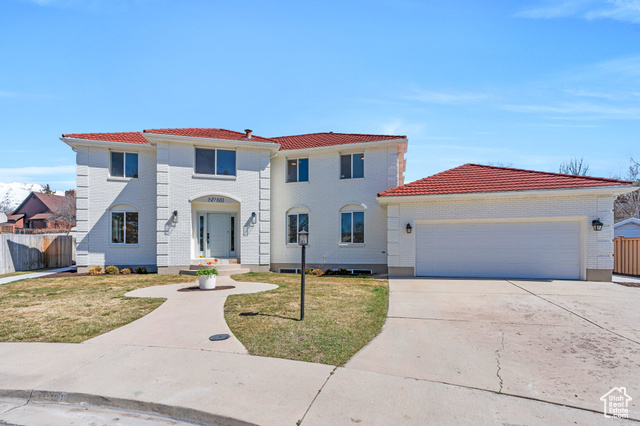



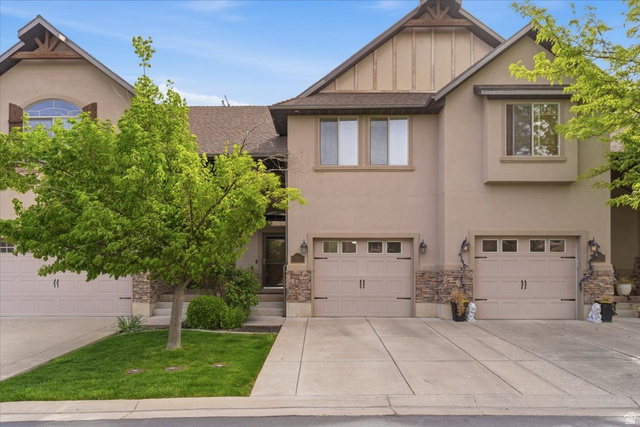

Restoring Utah’s Historic Homes: A Guide to Authentic Masonry
Utah’s historic homes carry a distinct architectural character shaped by regional stone, early craftsmanship, and centuries of environmental exposur


A clear, practical explanation of reverse mortgages helps Utah homeowners and their families make informed decisions about tapping home equity in retirement. This article summarizes key points about Home Equity Conversion Mortgages (HECMs), eligibility and documentation, cash distribution options, who benefits most, and what heirs can expect when a borrower passes away. The goal is to present the facts without marketing spin so Utah seniors, caregivers, and advisors can evaluate whether a reverse mortgage fits into a local retirement or financial plan.
A reverse mortgage is a loan secured by a home in which repayment is deferred until a later event—typically when the home is sold, the last eligible borrower permanently moves out, or the last borrower dies. Unlike a traditional (forward) mortgage, where the borrower begins with a large balance and makes payments to reduce it, a reverse mortgage starts with a low or zero borrower balance, does not require regular monthly payments, and accrues interest and fees over time. In essence, the cash flow is reversed: instead of the borrower paying the servicer, the servicer pays the borrower.
The dominant reverse mortgage product in the United States is the Home Equity Conversion Mortgage (HECM), which is insured by the Federal Housing Administration (FHA). As the only federal government-insured reverse mortgage, HECMs generally offer the most common terms and broadest protections available to borrowers. HUD (the U.S. Department of Housing and Urban Development) oversees the program through FHA rules and counseling requirements.
To qualify for a HECM, applicants must meet several requirements:
Since HECM borrowers remain homeowners, property-related expenses continue to be required. These include property taxes, hazard insurance, and HOA fees where applicable. Roots of common misconceptions are apparent when these ongoing duties are presented as though they are a “penalty” for reverse mortgages; in reality, maintaining the property is part of homeownership regardless of mortgage type.
HECM loans also include a financial assessment designed to evaluate the borrower’s ability to meet ongoing property charges. Introduced in 2015, the assessment reviews credit history, income sources, assets, and “residual income” (income minus living expenses). Rather than relying only on a forward mortgage-style debt-to-income ratio, the residual income standard helps identify whether a senior can reasonably sustain the costs of homeownership.
Residual income thresholds vary by household size and location. For example, commonly cited state-by-state examples have a two-person household in Florida with a residual income requirement near $886 per month; actual HUD thresholds depend on the local cost-of-living and household size. The financial assessment is intended to reduce the likelihood of default on property charges while widening access for borrowers who might not qualify under forward mortgage rules.
HECM proceeds can be distributed in several ways, and choice of distribution affects flexibility and long-term planning:
Deciding how to receive proceeds depends on cash needs, long-term financial planning, tax considerations, and the borrower’s goals. A combination of a modest immediate draw and a growing line of credit is a common planning strategy to preserve flexibility for future expenses.
Practitioners categorize HECM borrowers who gain the most value into three main groups:
Reverse mortgages are not a universal solution. Common situations where a reverse mortgage may be a poor fit include:
HECM reverse mortgages are non-recourse loans. That means neither the borrower nor heirs are required to repay more than the home’s value at the time of sale. FHA mortgage insurance premiums (collected as part of the loan cost and accruing interest) fund protections that limit the borrower’s or estate’s repayment liability to the home’s market value when sold.
Heirs commonly face these options when the last eligible borrower passes away:
Reverse mortgages—especially FHA-insured HECMs—are a legitimate financial tool for many seniors seeking to convert home equity to cash without monthly mortgage payments. Qualification requires age 62 or older, HUD-approved counseling, primary-residence status, sufficient equity, and the ability to maintain property charges as verified through a financial assessment. Well-suited use cases include urgent cash needs, lifestyle cash-flow planning, and integration into a broader retirement strategy. They are less appropriate for short-term residents or situations with minimal net benefit. Utah homeowners evaluating a reverse mortgage should compare options carefully with trusted local advisors and consider impacts on estate plans and long-term housing goals.
For Utah-specific housing resources and to explore local listings and market dynamics, consult https://bestutahrealestate.com. For official program information and regulatory guidance, authoritative resources include utah.gov and nar.realtor for broader real estate data.
Who is eligible for a HECM?
Eligibility requires at least one borrower age 62 or older, completion of HUD-approved counseling (certificate valid for 180 days), owner-occupancy of the property, conformity to FHA property standards, and sufficient home equity after paying any existing liens and closing costs. The borrower's ability to maintain property charges is evaluated through a financial assessment.
What ongoing responsibilities do borrowers have?
Borrowers must continue to pay property taxes, homeowner’s insurance, and any HOA dues. Failure to meet these obligations can lead to loan default and potential foreclosure, the same risk faced by any homeowner who stops paying required property-related expenses.
How does the financial assessment differ from forward mortgage underwriting?
Rather than relying solely on debt-to-income ratios, HECM financial assessments evaluate residual income (income minus expenses) and other factors to determine whether the borrower can sustain property charges. This approach can allow homeowners with substantial assets but modest documented income to qualify where forward-mortgage standards might decline them.
How can loan proceeds be received?
Proceeds can be received as a lump sum, scheduled monthly payments (for life or a set term), a line of credit that grows over time, or any combination of these options. Choice of distribution affects short- and long-term liquidity and should align with financial goals.
What protections do heirs have?
HECMs are non-recourse loans: neither borrowers nor heirs owe more than the home’s value at sale. Heirs can sell the home, refinance to keep it, finance the payoff in other ways (subject to market lending rules), or in some cases execute a deed in lieu of foreclosure if no equity remains and keeping the home is not desired.
Where can Utah homeowners get localized guidance?
Local real estate professionals, HUD-approved reverse mortgage counselors, and state housing resources are useful starting points. Official program details are available at HUD resources accessible via utah.gov, and national market context can be obtained through nar.realtor.

Utah’s historic homes carry a distinct architectural character shaped by regional stone, early craftsmanship, and centuries of environmental exposur

Smart home improvements do more than just lower monthly utility bills. They transform a house into a modern asset that appeals to the current generation of savvy buyers. High efficiency is now a standard expectation rather than a luxury upgrade. When you focus on the right systems, you build immediate equity while creating a more comfortable living environment for your family.

St. George summers are no joke. With temperatures regularly climbing past 105°F from June through September, a working air conditioner isn't a luxury in Southern Utah it's essential.

Utah’s spring housing market is showing signs of strain. Inventory is rising, contract cancellations are elevated, rents are softening, and buyer demand is not keeping pace with the number of homes hitting the market. For anyone asking whether Utah is shifting toward a buyer’s market, the latest signals point in that direction.
Access all your saved properties, searches, notes and more.
Access all your saved properties, searches, notes and more.
Enter your email address and we will send you a link to change your password.
I agree to receive marketing and customer service calls and text messages from Best Utah Real Estate. Consent is not a condition of purchase. Msg/data rates may apply. Msg frequency varies. Reply STOP to unsubscribe. Privacy Policy & Terms of Service.
Listings displayed on this website are provided via IDX. The website owner is not the listing broker or agent unless explicitly stated.

Your trusted MLS search companion