





Restoring Utah’s Historic Homes: A Guide to Authentic Masonry
Utah’s historic homes carry a distinct architectural character shaped by regional stone, early craftsmanship, and centuries of environmental exposur

Utah's business community has quietly built one of the most impressive entrepreneurial ecosystems in the United States. The Silicon Slopes corridor stretching from Provo through Salt Lake City has produced a concentration of technology companies, SaaS platforms, and professional services firms that punches well above the state's population weight. Companies like Qualtrics, Adobe's Utah operations, Pluralsight, and dozens of high-growth startups have put the state on the map as a genuine tech hub.
For those businesses ready to grow beyond US borders, Southeast Asia represents one of the highest-growth economic regions in the world, with a combined GDP exceeding $3 trillion and a middle class expanding faster than almost anywhere else on the planet. For Utah technology companies, e-commerce brands, and professional services firms with products or services that translate across borders, the APAC market is not a distant future consideration. It is a present opportunity.
The challenge is figuring out where to start, and how to establish market credibility without over-investing in a region before you have validated the opportunity.
Singapore is not the largest market in Southeast Asia. That distinction belongs to Indonesia. It is not the fastest-growing economy in the region either. But for businesses entering from the United States, it is the most practical starting point by a significant margin.
Here is why Utah businesses should consider Singapore as their first APAC market entry.
The language barrier is zero. English is the primary language of government, commerce, and business in Singapore. Your contracts, your client emails, your banking correspondence, and your conversations with local partners all happen in English. The invisible operational overhead of navigating a non-English business environment adds up quickly and slows market validation at exactly the stage when speed matters most.
The regulatory environment is clear and business-friendly. Singapore consistently ranks among the top three easiest countries in the world to do business in, according to the World Bank. Incorporating a company, opening a business bank account, and managing compliance are all significantly more straightforward than in most other APAC markets. The rule of law is strong, intellectual property protections are enforceable, and contracts mean what they say.
The financial infrastructure integrates with US operations. Sending and receiving international payments, managing multiple currencies, and connecting with US banking systems all work smoothly from Singapore in ways that are more complicated in Indonesia, Vietnam, Thailand, or the Philippines. For a Utah company billing clients across multiple APAC markets, this is not a minor operational detail.
The geography gives you access to everything. From Singapore's Changi Airport, you can reach Jakarta, Kuala Lumpur, Bangkok, Ho Chi Minh City, Manila, and Taipei in under four hours. Tokyo, Sydney, Mumbai, and Dubai take six to eight hours. Singapore is the regional hub in the literal sense: the shortest path between most points in Asia runs through it, and the connection quality is consistently excellent.
The time zone is workable. Singapore Standard Time is GMT+8, putting it 14 to 15 hours ahead of Mountain Time. Many Utah companies find that a 7am Mountain Time standup catches Singapore-based colleagues at their end-of-day wrap, which becomes a workable rhythm with some intentional scheduling.
Before you can sell, contract, or hire in Singapore, your business needs a local registered address. Singapore requires all registered companies to maintain a local address with ACRA, the Accounting and Corporate Regulatory Authority. This is the foundational legal requirement for operating in the market.
A virtual office address solves this immediately and affordably. It gives you a legitimate registered CBD address for corporate registration without committing to a physical office lease before the revenue justifies it.
Beyond the legal requirement, a Singapore address does something equally important commercially. An address in Singapore's Central Business District on your invoices, website, and sales collateral signals to APAC clients that your business has committed to the market. Many enterprise clients in Singapore and across the region prefer contracting with a locally registered entity over a foreign company operating entirely remotely. The address builds trust before the first meeting happens.
A good virtual office provider gives you more than just an address. You also get mail handling and forwarding for time-sensitive correspondence, a local Singapore phone number with professional call answering, and access to meeting rooms for when your team visits Singapore for business development or client work.
For Utah businesses that want their Singapore presence to reflect a premium standard from day one, The Work Project is the strongest virtual office option in the market. The operator was founded by professionals from the luxury hospitality industry and manages ten locations across Singapore's Central Business District, including addresses at some of the most recognisable commercial buildings in the city.
A virtual office membership gives your Utah business a registered CBD address for ACRA compliance and commercial correspondence, professional mail handling with forwarding, and access to meeting rooms and hot desk facilities across the full network whenever your team is in Singapore.
For a technology company or professional services firm based in Utah, the service standard that The Work Project brings to its workspace network means that when a team member does travel to Singapore for a client visit, the environment they work from reflects the same professionalism the Singapore address has been signalling in correspondence. The operator's network also extends to Hong Kong, Australia, and London, which matters for Utah businesses whose international growth plans extend beyond Southeast Asia.
If Singapore is on your growth roadmap, here is how the entry sequence typically looks for a US-based company.
Decide on entity structure. The most common choice is a Private Limited Company, which requires at least one director who is a Singapore resident. Incorporation service providers including Osome and Sleek can provide a nominee director arrangement alongside the registration, allowing the entity to be set up without relocating anyone to Singapore initially.
Establish your registered address. This is where a virtual office provider like The Work Project comes in. The registered address is required before the ACRA registration is complete, so this step runs in parallel with incorporation.
Open a business bank account. Singapore's banking system is well-developed, with DBS, OCBC, and UOB all providing business accounts for registered companies. Neobanks including Wise Business and Airwallex have made this significantly easier for international companies, with account setup possible without in-person visits.
Understand your tax position. Singapore has a corporate tax rate of 17 percent on chargeable income, with significant incentives available for qualifying technology and innovation-focused companies. The US-Singapore tax treaty prevents double taxation on income earned through Singapore operations. This is worth understanding early and worth discussing with a Singapore-registered accounting firm before you begin billing clients locally.
Begin market validation. With the entity in place, the bank account open, and the virtual office address handling local correspondence, you have the infrastructure to start selling, contracting, and building client relationships. The virtual office gives you the ability to move quickly without committing to a physical office until the revenue justifies the upgrade.
Southeast Asia will not wait for Utah businesses to feel fully ready before the window of opportunity narrows. The infrastructure to establish a credible Singapore presence is accessible, well-documented, and well within reach of companies that are still years away from needing a physical APAC office. Starting with a virtual office address is not a compromise. It is the right first move.

Utah’s historic homes carry a distinct architectural character shaped by regional stone, early craftsmanship, and centuries of environmental exposur

Smart home improvements do more than just lower monthly utility bills. They transform a house into a modern asset that appeals to the current generation of savvy buyers. High efficiency is now a standard expectation rather than a luxury upgrade. When you focus on the right systems, you build immediate equity while creating a more comfortable living environment for your family.

St. George summers are no joke. With temperatures regularly climbing past 105°F from June through September, a working air conditioner isn't a luxury in Southern Utah it's essential.

Utah’s spring housing market is showing signs of strain. Inventory is rising, contract cancellations are elevated, rents are softening, and buyer demand is not keeping pace with the number of homes hitting the market. For anyone asking whether Utah is shifting toward a buyer’s market, the latest signals point in that direction.
Access all your saved properties, searches, notes and more.
Access all your saved properties, searches, notes and more.
Enter your email address and we will send you a link to change your password.
I agree to receive marketing and customer service calls and text messages from Best Utah Real Estate. Consent is not a condition of purchase. Msg/data rates may apply. Msg frequency varies. Reply STOP to unsubscribe. Privacy Policy & Terms of Service.
Listings displayed on this website are provided via IDX. The website owner is not the listing broker or agent unless explicitly stated.
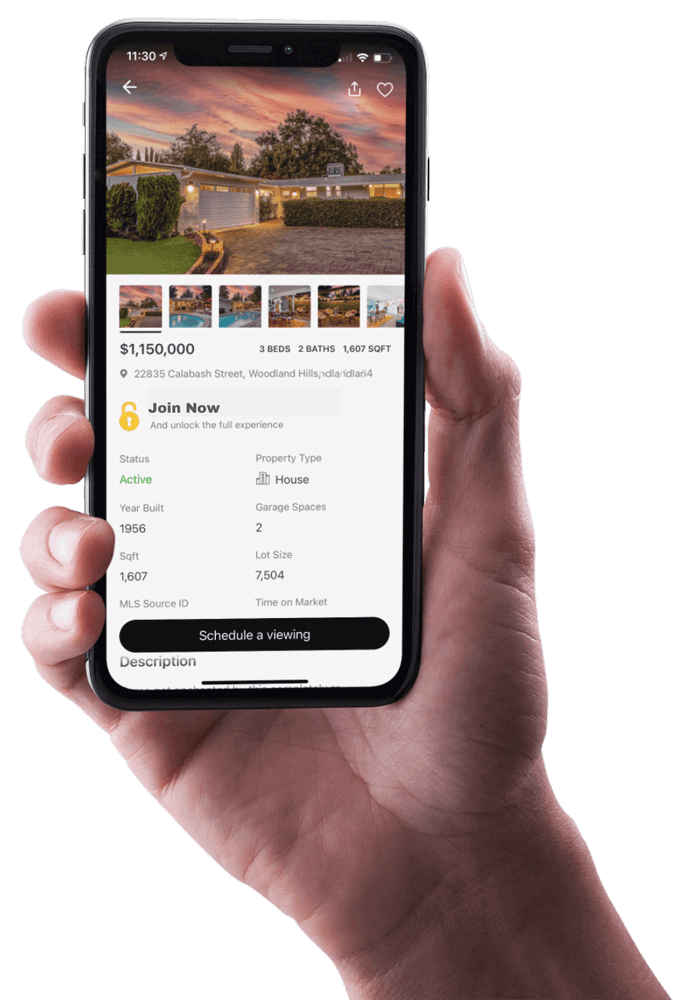
Your trusted MLS search companion